
EO AFRICA R&D Facility Online Course
Water Budget from Space
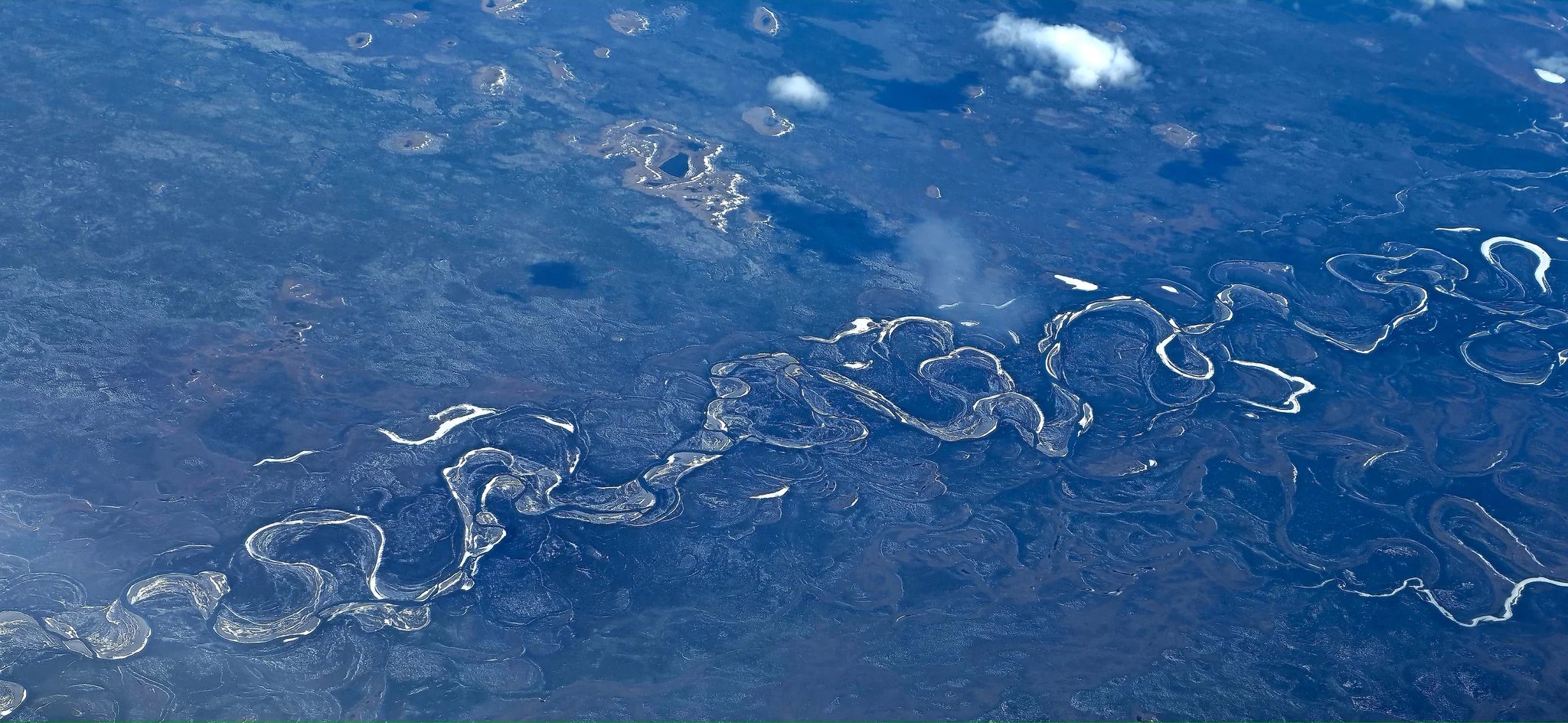
Introduction to the course
At the surface of the Earth, precipitation and evapotranspiration are the external drivers of water availability in watersheds. A surplus of precipitation feeds aquifers, surface waters, snow, ice, soils moisture and water contained in the biosphere. On the other hand, when evapotranspiration exceeds precipitation, these terrestrial sources are depleted.
Overlaying the natural cycles, the warming atmosphere associated with climate change is changing precipitation and evapotranspiration patterns at both long and short timescales. Furthermore, anthropogenic interventions in water and land use, change feedback mechanisms.
This course helps you to explore the use of Earth Observation (EO) techniques to quantify the different budget components of the water cycle and study its change over time.
To do this, the course covers earth observation products of precipitation, evapotranspiration and storage change. An emphasis will lie on designing and implementing hands-on Jupyter notebooks running on EO AFRICA RDF’s Innovation lab.
Objectives
After successfully attending the course, participants will be able to understand the major contributors to the water budget and will be able to set up reproducible workflows which estimate water budget components from earth observation data for regions of interest.
Prerequisites
The participants are expected to have a basic knowledge on Earth Observation, Python programming and the use of cloud environments for EO raster processing. All these can be acquired by reviewing the first two online courses of the EO AFRICA R&D Facility:
- OC01: Principles of and Advances in Earth Observation
- OC02: Cloud Computing and Algorithms for EO Analyses,
- which we advise to go through for refreshing the knowledge on basic principles of EO and tools/algorithms.
Access to both courses will be given to those selected to attend this online course.
Schedule
This online course will last for a total of 40 hours covering the period 12 October until 6 November 2026 (4 weeks with a daily study-load of approximately 2 hours – 10 hours a week). All required course materials will be provided upfront through the Moodle Cloud learning platform. Participants are expected to digest the training materials independently by themselves. Regular live sessions on Mondays or Wednesdays and Fridays each week will be organized during which teachers will engage with the students on questions/make clarifications. These are scheduled at 16:00 CET/CEST. In addition, a forum will be established on Moodle for participants to interact amongst themselves and with the teaching staff. A detailed day-to-day time schedule of course activities will be provided.
Course material accessibility
Course materials & Discussion forum will be hosted on MOODLE platform and on GitHub. Each section of the dedicated Moodle platform corresponds to “one training day”.
Exercises and Case studies will need to be completed on your desktop or the Innovation Lab depending on internet connectivity.
Live Q&A sessions will be hosted on MS Teams.
Course evaluation and certificate
During the final week of the course, participants will design and upload a Jupyter notebook assignment through Moodle in which all knowledge and skills taught in the course will be integrated. Students are expected to work on their Jupyter Notebook assignment on their own or in pairs. Students will be given their score and feedback after the notebook has been evaluated. Course evaluation will be solely based on the successful completion of the assignment. If successful, a certificate of completion of the course will be sent to you by the EO AFRICA Research and Development Facility.
Throughout the course, a series of short quizzes/formative assessments will also be available to test your knowledge. These short quizzes are purely meant to evaluate your understanding of the material but will not be considered during formal course evaluation.
Instructors
-
Assistant Professor – Department of Water Resources, Faculty ITC of the University of Twente
https://people.utwente.nl/r.rietbroek
r.rietbroek@utwente.nl -

Assistant Professor – Department of Water Resources, Faculty ITC of the University of Twente
https://people.utwente.nl/e.prikaziuk
e.prikaziuk@utwente.nl