
From Satellites to Streamflow:
Modern Tools for River Monitoring
In a changing climate, reliable monitoring of river discharge across entire catchments is more crucial than ever. Yet in many regions, in situ measurements of water level and discharge remain sparse, difficult to maintain, or entirely unavailable. Today, Earth Observation (EO) technologies offer powerful new ways to monitor surface waters and to understand river dynamics from local to regional scales.
This intensive one week course introduces participants to modern EO data sources and demonstrates how to extract river related parameters—such as water levels and discharge—from satellite missions including Sentinel 3 and Sentinel 6 radar altimetry. Participants will also explore large scale water balance approaches, using satellite gravimetry data to investigate terrestrial water storage variations and their links to river systems. The programme blends core measurement principles with hands on sessions in the Innovation Lab, where participants process real datasets and apply EO methods to real world challenges.
To complement the EO modules, the course provides a solid grounding in river hydraulics. Participants will revisit the geometric and physical parameters that govern river discharge and practise how to obtain, analyse, and interpret them. Through manual exercises and cloud based workflows, they will conduct sensitivity analyses and develop an intuitive understanding of discharge estimation. The programme continues with 1D hydraulic modelling, covering the evaluation of rating curves and the analysis of discharge–depth–elevation relationships using cross sectional profiles.
A field session is planned on campus (weather permitting) under the motto “Get to know the river”. This engaging component allows participants to observe a river system through the lens of a hydraulic engineer and to connect field observations directly with theoretical concepts. The course concludes with an introduction to 2D hydraulic modelling, expanding the focus from river channels to flood prone rural landscapes and illustrating how hydraulic models support flood assessment and solution design. Where possible, drone based surveys will complement these activities by providing high resolution topographic data.
Overall, this course offers a practice oriented, integrated learning experience that bridges satellite observation, field understanding, and hydraulic modelling—strengthening river monitoring and water management capacities across Africa.
Learning Objectives:
- Explain the principles of radar altimetry for inland water applications.
- Explain how satellite gravimetry (e.g., GRACE and GRACE-FO) supports catchment-scale water balance closure.
- Apply Python libraries and cloud-based tools within the EO Africa Innovation Lab to process EO datasets.
- Develop and implement EO data processing workflows using interactive Jupyter Notebooks.
- Interpret and analyze the geometric and physical parameters governing river discharge.
- Integrate EO-derived altimetry data with in-situ river flow observations at cross-point locations.
- Apply 1D hydraulic modelling to derive and evaluate rating curves in data-scarce environments.
- Apply the use of Sentinel data for river geometry, extent and validation.
- Assess river characteristics in the field using fundamental hydraulic principles.
- Apply and evaluate 2D hydraulic modelling approaches to support flood assessment and solution design in rural areas.
Each day of the workshop will consist of morning and afternoon sessions with total duration of 6 hours. The sessions will focus on the introduction to relevant concepts, methods, data, platforms and cloud computing. Theoretical lectures will be intertwined with practical exercises. Participants will be asked to shortly present their group assignment during the last day of the training.
ABOUT THE COURSE
CAN I APPLY?
Who can participate?
The participants need to have basic programming skills in Python.
Participants should reside in one of the African countries, should have an academic background related to Geoinformation/Earth Observation Science, Computer Science in combination with knowledge on Water Resources Management, Irrigation, Agriculture, or similar. Experience with the use of cloud environments will be an asset. Young researchers in this field are encouraged to apply!
Teachers:
-
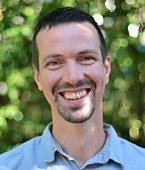
Assistant Professor – Department of Water Resources, Faculty ITC of the University of Twente
https://people.utwente.nl/r.rietbroek
r.rietbroek@utwente.nl -
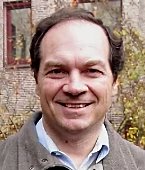
Senior lecturer – Department of Water Resources, Faculty ITC of the University of Twente
https://people.utwente.nl/g.n.parodi
g.n.parodi@utwente.nl
Registration:
Schedule
Each day will consist of morning and afternoon sessions with total duration of around 6 to 8 hours depending on the day and the weather during the Fieldwork period.
The introduction session will focus on the general set-up of the EO AFRICA R&D Facility, where we give information on previous courses dealing with the cloud computing environment, EO data access, EO data processing using various cloud-based tools including practical hands-on sessions.
Other session will be focus on EO data acquisition for EO Based Basin Water Balance and Altim-etry to scale-up to the linkage with river data supported by modelling at cross points.
Participants will be asked to present a short case study related to a selected area of interest, exposing the problems the area has and their studied or foreseen solutions.
- Morning session: 8:45 – 12:30 (including coffee break).
- Lunch break: 12:30 – 13:45.
- Afternoon session: 13:45 – 16:30/17:30.
Certificate of Attendance
All participants who will complete the course and present their group case study will receive a Certificate of Attendance issued by the EO AFRICA R&D Facility.
Technical requirements
The participants need to have basic programming skills in Python.
Participants are requested to bring their own laptop and mouse as compulsory for this course. Access to the Innovation Lab (EOAFRICA’s cloud computing facility) will be granted prior to the course.
Cost and Sponsorship
Attendance to the training course is free of charge.
Participants will need to arrange and pay their own travel, subsistence and accommodation. Lunch and coffee break will be provided during the workshop. The Facility can sponsor up to EUR 200 to cover out of town travel expenses. Local travel cost will not be reimbursed. Accommodation can be arranged if required. Should you want to apply for this funding, please indicate it in the application form. Payment of the 200 Euro (max) will go via bank transfer and will be arranged after completion of the workshop.
This funding is not applicable for those coming through finance via the Research Call 4 EO AFRICA R&D Facility.